



Written by Joshua Murdock, PharmD, BCBBS
ACU-Serve is a revenue cycle management company serving providers across post-acute care segments. Founded in 1993, the company has built its reputation on deep, specialized knowledge of a highly regulated niche.
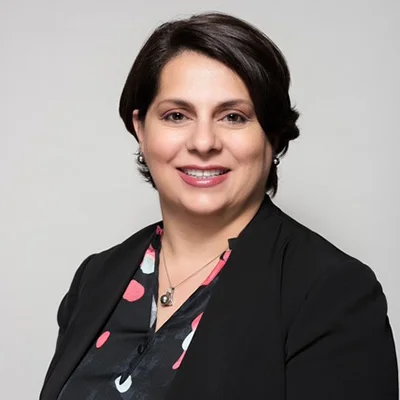
Natasha Baria Mehta was named President of ACU-Serve in May 2026, bringing more than 25 years of revenue cycle management experience to the role. She most recently served as President and COO of GetixHealth, overseeing over $12 billion in gross client charges. At ACU-Serve, she now leads revenue cycle management across the company’s home medical equipment (HME)/durable medical equipment (DME), infusion, and home health divisions.
In this exclusive interview with RXinsider, Mehta discusses what drew her to ACU-Serve’s culture, her work realigning historically separate divisions into one unified platform, and how the company is navigating regulatory change across the post-acute space. She also shares what differentiates ACU-Serve for providers evaluating revenue cycle partners and what success looks like for the company over the next 1 to 2 years.
RXinsider: What made this move to ACU-Serve the right next step for you?
Mehta: I actually wasn’t looking for another opportunity. When the recruiter first reached out, which happens periodically, my initial response was, “No, I’m not interested.” And they said, “Just read the job spec.”
So I did. What immediately caught my attention was that there were 2 or 3 paragraphs dedicated entirely to culture. I remember thinking, “What is so special about this culture that they’re spending this much time talking about it?” Then I met Jim Knight and the rest of the leadership team, and I understood.
ACU-Serve has built something that’s difficult to replicate. It’s a very family-oriented culture, but there’s also a strong corporate mindset and an opportunity to bring even more structure and scalability to the organization. That combination was incredibly appealing to me.
I also saw a company with more than 30 years of deep expertise and strong client relationships, ready for its next stage of growth. I knew I could bring my experience in revenue cycle management and large-scale operations to that foundation and help build what comes next.
Healthcare revenue cycle fundamentals are consistent, but post-acute care has its own complexities. For me, that made the opportunity even more interesting. I wasn’t coming in to reinvent what ACU-Serve does well. I was coming in to help take an already strong organization to the next level.
RXinsider: You mentioned the family and corporate environments and how those blend together nicely. Did any other parts of the culture really stand out to you?
Mehta: The biggest thing is the team and the depth of knowledge that exists here. Getting to work alongside our CEO, Jim Knight, and COO, Amie Barone, has been incredible. Amie has worked alongside Jim for more than 20 years, and together they have a tremendous understanding of the business, the industry, and our clients. That kind of trust and institutional knowledge is something you simply can’t replicate.
Coming in with an outside perspective, I’ve been asking, “How do I build on that? How do we preserve what has made ACU-Serve successful while bringing even more structure and scalability to the organization?”
That’s where I’m focused. My goal is to build on the expertise, relationships, and culture already in place and create a modern, scalable platform that enables us to continue growing without losing what makes ACU-Serve different.
RXinsider: You’re now overseeing home medical equipment, durable medical equipment, infusion, and home health as distinct divisions. Do they need different things from you right now, or is there one operational thread that runs through all of them?
Mehta: When I joined ACU-Serve, we had several distinct areas of the business operating somewhat independently. While each area has its own nuances and requires specialized expertise, there is a common thread from an operational perspective. That’s really where my focus has been.
We’re realigning around shared functions and processes and bringing the teams together as one ACU-Serve. The goal isn’t to lose the specialized expertise within each area; it’s to create greater alignment, consistency, and collaboration across the organization.
Ultimately, we’re building a single scalable platform that allows us to leverage the expertise across the entire company and better support our clients as we grow.
RXinsider: HME/DME and infusion providers are under real pressure on reimbursement and margins right now. What’s the revenue cycle management lever that’s most underused by providers in this space?
Mehta: I don’t know that I would call it underused as much as I would call it underestimated. One of the biggest opportunities is staying ahead of change rather than reacting after it has already affected reimbursement.
Providers can’t afford to think of revenue cycle management as simply billing and collecting anymore. Regulatory changes, payer requirements, audits, denials, and margin compression are all interconnected. You have to understand what’s happening across the entire revenue cycle and identify issues before they become larger downstream revenue problems.
Compliance is a big part of that. Our Chief Compliance Officer, Noel Neil, leads that effort, and we’re very active in advocacy and the organizations representing the industries we serve. During my third week with ACU-Serve, for example, I was in Washington, D.C., for Advocacy Day. Being part of those conversations helps us stay close to what’s happening in the industry and bring that knowledge back to our clients.
We also have the advantage of seeing trends across a broad client base. When payer behavior changes, a new denial pattern emerges, or we’re seeing increased audit activity, we can connect those signals.
That’s where I see the real opportunity: staying ahead of what’s coming, understanding what it means operationally and financially, and helping providers take action before it becomes a bigger revenue problem.
RXinsider: How do you track the upcoming regulatory changes? What’s your process like?
Mehta: We approach it from several directions. Our compliance team stays closely engaged with Medicare, regulatory developments, industry associations, and conferences, giving us important visibility into what’s happening and what may be coming next.
We also learn a tremendous amount from the work we do every day for our clients. We’re seeing claims, denials, audits, payer behavior, and reimbursement challenges across a broad client base. When something changes, or a new pattern begins to emerge, we’re often able to see those signals early.
The important part is turning that information into action. We’re continuing to expand our consulting capabilities to go beyond simply telling a client, “This change is coming.” We want to help them understand what it means for their organization, evaluate the operational and financial impact, and work alongside them on what needs to happen next.
There’s an enormous amount of change happening in healthcare, and our role is to help clients cut through the noise, focus on what is most impactful to their business, and respond strategically rather than reactively.
RXinsider: If you’re talking to an HME, DME, or home health provider evaluating revenue cycle management partners right now, what’s the one question they should be asking that most don’t?
Mehta: I think they should be asking, “Will this company truly understand my business and operate as a partner?”
The relationship is incredibly important in revenue cycle management because you’re trusting another organization with a critical part of your business. But that relationship also has to be backed by deep expertise.
I was recently with one of our larger clients, a publicly traded company, and I asked them, “Why did you choose ACU-Serve?” Their answer was simple. They referred to our reputation and the depth of expertise we bring to the table. They weren’t looking for a company that could simply put more people to work. They wanted people who truly understood the work and their business.
They also pointed to our size as an advantage. They wanted the capabilities and resources of a larger organization without losing the access and personalized service that comes from having a true partner.
That’s a sweet spot for ACU-Serve. We have the scale, technology, and expertise to support sophisticated organizations while still providing the relationships and accountability our clients value.
And because we work across the leading billing platforms in the markets we serve, we’re not coming in and telling a provider they need to change their software. We understand their existing environment and help them make it work better for their business.
RXinsider: What does success look like for you at ACU-Serve 1 to 2 years from now?
Mehta: I’d put it into three areas.
The first is to continue strengthening the alignment of our teams and processes. We’re bringing the organization together around shared functions, greater consistency, and better visibility while maintaining the specialized expertise within each area of the business. That’s the foundation for everything else we want to accomplish.
The second is technology. We’re investing in relevant technology and forming strategic partnerships around AI and automation, but we’re being very intentional about it. I don’t want AI to become a buzzword or technology to be something we adopt simply because it’s available. It has to solve a real problem, create efficiency, improve visibility, support our experts, or deliver better outcomes for our clients.
The third is growth. We have significant opportunities within the markets we serve today, while also exploring adjacent areas where our revenue cycle expertise can create value, including further expansion in home health and in areas such as palliative care and specialty pharmacy.
All three have to work together. You need a strong organizational foundation, the right technology, and a thoughtful growth strategy. If we do those things well, we can continue to scale ACU-Serve while preserving the expertise, relationships, and client focus that have always differentiated us.