


By Jacquelyn Cituk, PharmD, MBA, BCSCP
In pharmacy cleanrooms, selecting a sporicidal agent is more complex than choosing a product labeled “sporicidal.” Differences in formulation, active ingredients, contact times, and efficacy profiles can significantly affect contamination control and compliance with United States Pharmacopeia (USP) standards.
Understanding these differences is essential for maintaining control and minimizing the risk of microbial contamination.
Why spore-forming organisms are hard to eliminate
Spore-forming microorganisms are among the most difficult contaminants to eliminate. They produce highly resistant dormant structures that can survive harsh environmental conditions and many routine disinfectants.
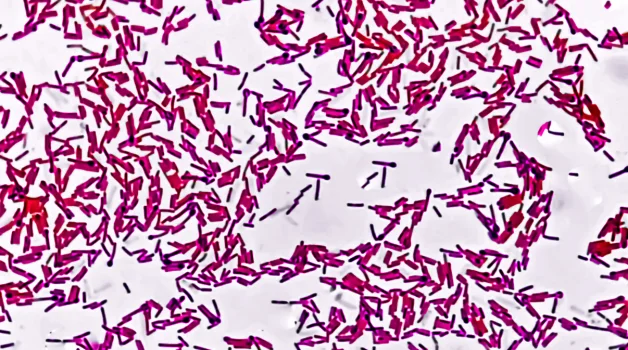
Organisms of particular concern in pharmacy cleanrooms include Bacillus species (such as Bacillus subtilis), Clostridium sporogenes, and Clostridioides difficile, which was formerly classified as Clostridium difficile. These organisms are frequently associated with environmental contamination and can persist on surfaces despite routine cleaning and disinfection.
Table 1. Common Spore-Forming Organisms Used to Validate Sporicidal Efficacy
| Organism | Common sources |
| Bacillus subtilis | Soil, dust, packaging materials, air |
| Clostridium sporogenes | Soil, water, and environmental contamination |
| Clostridioides difficile | Fecal contamination and healthcare environments |
How USP <797> requirements shape sporicide selection
USP <797> requires the use of a cleaning agent, a disinfectant, and a sporicidal disinfectant as part of an environmental control program. The standard recognizes that spores require a higher level of microbial control than vegetative bacteria, fungi, and viruses.
According to ASHP, a sporicidal disinfectant must be applied in accordance with the manufacturer’s instructions, including the validated concentration and contact (dwell) time required to achieve spore kill.
One of the most overlooked differences between sporicidal products is contact time. A product may claim sporicidal activity, but only after remaining wet on the surface for 3, 20, or even 25 minutes. If the surface dries before the required contact time is reached, the expected level of spore reduction may not occur. In cleanrooms with high airflow, long contact times can be operationally challenging, which makes product selection an important consideration.
Active ingredients also vary among sporicides. They commonly include:
- Hydrogen peroxide
- Peracetic acid
- Hydrogen peroxide/peracetic acid blends
- Sodium hypochlorite
- Chlorine dioxide
What’s more, research has shown that products marketed as sporicidal do not necessarily provide equivalent efficacy against resistant spores.
In a comparative study of five disinfectants with sporicidal claims, Gemein et al. found significant differences in performance against C. difficile spores. Peracetic acid-based formulations consistently achieved the required spore reduction. Some hydrogen peroxide-based products showed reduced efficacy and required substantially longer contact times to achieve similar results.
These findings show why a sporicide should be evaluated on validated efficacy data, target organisms, and required contact time under actual use conditions rather than on label claims alone.
Other factors to consider when selecting a sporicide include material compatibility, residue, odor, worker safety, ease of application, and packaging. Sterile, ready-to-use products are preferred for critical cleanroom environments because they reduce preparation errors and the risk of introducing contamination.
The bottom line
An effective sporicidal program requires more than purchasing a product with a sporicidal claim. Pharmacies should evaluate microbial efficacy, validated contact time, ease of use, and compatibility with cleanroom surfaces while ensuring compliance with USP requirements.
The most effective sporicide is the one that consistently achieves the required level of spore control while fitting the operational realities of the cleanroom.
References
American Society of Health-System Pharmacists. (2023). Cleaning and disinfecting. The Sterile Compounding Answer Book.
Gemein, S., et al. (2022). Efficacy of five ‘sporicidal’ surface disinfectants against Clostridioides difficile spores in suspension tests and 4-field tests. Journal of Hospital Infection.
Lawson, P. A., et al. (2016). Reclassification of Clostridium difficile as Clostridioides difficile (Hall and O’Toole 1935) Prévot 1938. Anaerobe.