


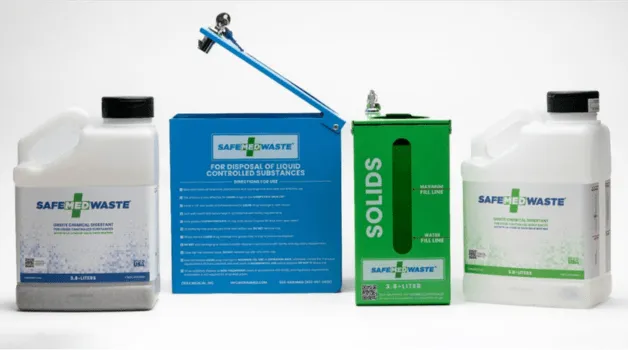
I’ll be at ASHRM 2026 in Phoenix, October 4–6, with Pat Buckley and Andrew Buckley. I hope healthcare risk leaders will bring us one thing: their current medication-waste workflow.
Contained ≠ Destroyed
A controlled substance can be documented as wasted and placed in a secure container while the active pharmaceutical remains intact.
That distinction matters. Documentation is an essential control. Containment can be an essential control. Neither one, by itself, answers a different question: When is the drug actually destroyed?
In a hospital, “wasting” means that a clinician discards an unused portion of medication and documents the event. The waste may be a partial vial, liquid remaining in an infusion bag, a tablet or other solid dosage unit, or stock removed from the pharmacy. It may be generated in a patient room, medication room, operating room, or pharmacy.
The medication may then move through secure containers, internal handling, accumulation areas, storage, transport, and final treatment. At each point, the organization may have appropriate policies and controls. But until the active pharmaceutical is destroyed, it remains part of the organization’s pharmaceutical-risk pathway. Read More >