

Written by Joshua Murdock, PharmD, BCBBS
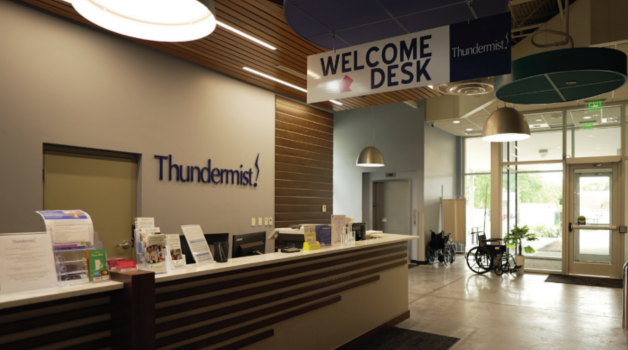
Thundermist Health Center doesn’t look like a typical health clinic. It feels like a small health system. In addition to its primary care services, this federally qualified health center (FQHC) offers substance use
disorder treatment, HIV care through the Ryan White HIV/AIDS Program, a dental practice, mobile medical units, and clinics embedded directly inside local high schools, among other services. The organization has been a Rhode Island institution for more than 50 years. Its primary locations in the state are in Woonsocket, West Warwick, and Wakefield.
RXinsider spoke with Jeffrey Gaines, MD, MHCM, FACEP, chief medical officer, and Christopher Durigan, PharmD, director of clinical pharmacy services, about what it takes to run a sustainable healthcare organization built around removing barriers to care. The conversation covered how Thundermist’s FQHC status shapes its work with underserved patients, why the 340B Drug Pricing Program is central to keeping care affordable, how pharmacy is integrated into clinical decisionmaking, and the funding pressures Gaines and Durigan expect to define the next several years for community health centers nationwide.
Q. To set the stage, tell us about some notable patient care services that Thundermist offers across its locations.
Gaines: When I first started here, I thought I knew a lot about Thundermist. But the core of what I knew was based primarily on primary care (family practice, some internal medicine and pediatrics, and a lot of obstetrics and gynecology). Then I learned we actually have a really robust dental practice, which, coming from my perspective as an emergency room physician, is huge. We also have convenient care with walk-in access, and that’s not just for Thundermist patients. We offer it 7 days a week to anyone in the community. We do a lot of HIV care, too. We also work closely with the Women, Infants, and Children (WIC) program and other government agencies to help connect patients with resources. It’s a big organization, yet it’s small enough that there isn’t much red tape or bureaucracy. We can be really nimble.
Durigan: That’s been a theme for me, too. Thundermist is a sizable organization, but it’s not like some places where the CEO is a distant figure you never see. During COVID-19, for example, we thought, “What if we just set up our own testing site?” So we set it up in the parking lot, and people came from across the state. We also set up an infusion clinic to treat COVID, which we’d never done before. Our ideas end up becoming reality because, like [Gaines] said, there’s no red tape in the way. If we have enough people to staff a project, we’ll just do it. You’ll see this theme come up again and again. Identifying what’s getting in the way of personal, community, and
population health, then finding creative ways to solve it.
Q. How does being an FQHC allow Thundermist to deliver care differently from other healthcare organizations?
Gaines: The whole premise of FQHCs is to focus on the patients with the greatest need who also face the greatest barriers. Think language barriers, geographic barriers, and other social and structural determinants of health. It’s easy for us to say, “Go for a walk after lunch; it’s good for your digestion and your health.” But if you live in a town without sidewalks, or where it’s dangerous to walk because kids have to walk along the curb, that advice doesn’t hold up. There are real structural challenges our communities face where the idea sounds great, and you may be motivated to do it, but it’s hard to pull off in real life. We say to eat more vegetables, but if you walked in concentric circles around [Woonsocket], I’d be curious how far you’d get before finding a store with fresh produce. It’s essentially a food desert; you’d wear out a pair of shoes before finding a fresh head of broccoli. These are still real challenges in 2026, which is hard to believe. The point is that, in my opinion, FQHCs were designed specifically to focus on that set of problems and the patients and communities who face them most. When someone walks into a Thundermist office, they find a genuinely beautiful space, well-funded through government grants, and they’re welcomed here in a way that’s almost heartbreaking because it’s one of the only places where they’re treated the way a human being ought to be treated. It creates an amazing dynamic. No matter who you are or where you come from, the staff greet people by name and know their whole story.
Durigan: Similarly, let’s say I was a patient who lost insurance and didn’t know how to navigate that situation. We have social services here to help people navigate that. We’re not constantly sending people out hoping they’ll go to another resource. We have them here, which removes the uncertainty about whether they’ll actually be able to access care. For me, the most helpful thing about working in this environment is the team approach. We have so many different team members who are all contributing to help the patient.
Q. How does participation in the 340B Drug Pricing Program help Thundermist offer comprehensive,
affordable care? What does that look like day-to-day for physicians, pharmacists, and other healthcare professionals at Thundermist?
Durigan: From a staff or provider perspective, I think the program is a clear way to allow patients to access medications more affordably. Its intent is to help us stretch scarce resources, but for providers, it’s largely a drug discount program. Medications are becoming more expensive every year, and the pharmacy team helps providers and staff identify which options across different drug classes are available at discounted prices. Not only do we pass along the discount, but sometimes we’ll pay for the medication outright because even a dollar can be too much for some of our patients. It’s a really good tool for keeping patients on therapy and out of the hospital.
Gaines: I have a couple of different perspectives on the same point. As a provider, and to [Durigan’s] point, it’s helpful for me to know when I have clinical equipoise between medications in a similar category, and whether some of those options are more affordable for patients. Compliance is just as important as choosing the right drug. Then there’s the other perspective, now sitting in a physician executive role. I see, exactly as [Durigan] said, what a lifeline 340B is for an FQHC’s financial sustainability. We’re trying to do so much with so little, even with grants, government support, and patient revenue. That 340B revenue line on the budget is an absolute lifeline. That’s why we’re strong advocates for 340B legislation and anything that supports it.
Q. Tell us more about how pharmacy is integrated into the care team at Thundermist. For instance, are pharmacists embedded in primary care visits, doing medication therapy management (MTM), and so on? How do you measure success?
Durigan: Pharmacy touches on many different aspects of care here, which makes it interesting. Helping patients navigate medication affordability is one factor, whether through 340B, insurance, patient assistance programs, or options like GoodRx. We also navigate insurance formularies, figuring out alternatives when a drug isn’t covered. We don’t do MTM because few insurers cover it outside a retail pharmacy setting, but we basically do the same thing during clinic visits. Through our electronic health record (EHR), a provider will send us a case and say, for example, “This patient has diabetes or COPD and keeps ending up in the hospital. Can you look at them and see if there’s anything we can do to optimize what they’re taking?” We also field much simpler questions, like whether there are any drug interactions on a patient’s medication list. We’re also part of an administrative committee. Over the last few years, we have established a pharmacy and therapeutics (P&T) committee to coordinate all medication-related aspects of the clinic, including medication administration by nurses, medication policies, and related matters.
Gaines: Pharmacy is so interwoven into the fabric of the organization that it’s hard to pick out individual examples. Take patient safety, for example. Whenever we’re looking at medication errors or running a patient safety initiative, we bring pharmacy in to make sure we’re not missing anything. The same goes for infusions, vaccines, and other public health initiatives, where we want our pharmacy colleagues involved from the start. Even at a high strategic level, [Durigan] has presented to our board of directors on topics that repeatedly arise related to pharmacy or 340B. There’s attention from the board level all the way through the organization, recognizing that pharmacy and medication management are interwoven and need to be handled carefully.
Q. Staying on the topic of delivering patient care, but shifting to a more operational lens. How has technology changed the clinical side of care at Thundermist?
Gaines: Our EHR is eClinicalWorks (ECW), one of the more common ambulatory EHRs. Within ECW, there are a decent number of tools and capabilities, and we have several teams working to optimize it for clinicians and staff for real-time management, ordering, and documentation. Layered on top of that, we’ve been exploring innovative tools, including some AI tools, to see what’s possible. For example, we have ambient scribes for appointments. It’s nice because a provider can opt to use that, and with patient consent, have a chart essentially constructed by the end of the visit. This type of technology helps our providers focus on patient care without worrying as much about capturing all the data. ECW also has modules for billing and coding, so we don’t have to become billing and coding experts.
Durigan: Other random technologies come to mind for me. We have interpreter services and a sign language iPad. We’re still doing telehealth visits. We have portals for continuous glucose monitors (CGMs), so we can see patients’ glucose at home if they’re using their phone for monitoring. ECW also has limited, but some, external prescription history, so we can see what patients are filling regardless of who’s prescribing it. Insurance formulary connections can also be helpful.
Q. Going off that, given Thundermist’s target population, how often do you recommend advanced therapies such as smart inhalers, CGM devices, or injection pens?
Durigan: A lot of that’s insurance-driven. For instance, I have a smart pen for demonstration purposes, but I don’t think I’ve ever had a patient on one. The same goes for smart inhalers. CGMs, though, are much more accessible than they used to be, so we have many patients on them, which makes management 10 times easier.
Gaines: CGMs are a great example of something that started out as new and costly and, over time, became more commonplace as costs came down. Given our investment in the community and the patient population we serve, some of these new, innovative devices are sometimes out of reach when they’re expensive. But as they become more commonplace, we want to make sure that, whenever possible, our patients have access to the best available care.
Q. Do you work with any vendors for 340B management?
Durigan: We manage it ourselves, but we do work with vendors, such as TPAs [third-party administrators]. Some pharmacies require you to use their own TPA. We also work with an external auditor for 340B audits.
Q. Thundermist has an on-site CVS. Tell us about that partnership and what other preferred pharmacies you work with.
Durigan: It predates me, but my understanding is that we actually used to have our own pharmacy, and it just became too burdensome. At the time, it was a much different era. We’re talking maybe 30 years ago. But more recently, probably 15 to 20 years ago, I believe we approached CVS and asked if they’d be interested in running the pharmacy instead, since their headquarters is so close. It’s been great ever since. The staff at that store is exceptional. They almost act as if they work for us because they’re so helpful to patients. They go out of their way to reduce barriers, too, and they’ll call me if they need input to help initiate any changes that would make it easier for patients to get their meds. We also use other pharmacies, especially ones that offer delivery. There’s White Cross Pharmacy and another independent that goes by three different names but is all the same company: Park Square Pharmacy, Coventry Pharmacy, and Atwood Pharmacy. We like using them not only because they’re independent and have a good rapport with patients, but also because they offer medication packing, which helps organize patients’ medications. Their delivery is included in the dispensing fee, too.
Q. FQHCs have been under some pressure lately. From a holistic lens, what healthcare trends do you believe will have the greatest impact on Thundermist and other FQHCS over the next 3 to 5 years?
Gaines: At the highest level, our CEO, Chuck Jones, spends a lot of his time engaging with local representatives, since advocacy is a big part of what we do. That’s one side of it, pushing for what allows the best possible care for our communities. The other side is uncertainty around grants, federal payments, and issues like 340B, which are constantly in the news.
We track the political and media landscape closely, both to advocate for our patients and to stay nimble, since we’re building next year’s budget around some genuinely unstable assumptions. It’s a balancing act between advocacy and resilience. A major political swing against FQHCs isn’t out of the question, and the consequences for our patients would be severe. We do everything we can to avoid that.
Durigan: A lot of what we do is uncompensated care, so we need every available avenue to buffer our operations. With 340B under attack and Medicare and Medicaid cuts looming, FQHCs across the country could be crippled. And who would provide care instead? There aren’t many organizations positioned to absorb our 65,000 patients if they suddenly lost their PCPs.
Gaines: If you walk around Rhode Island and run into 17 people, one of them is going to be a Thundermist patient. It’s a big swath of the population in this state. It’s a big responsibility to advocate for patients who often lack a voice, whether due to illness, language barriers, or limited access. Having direct communication with our CEO comes with a duty to speak on their behalf through community needs assessments and to relay their concerns upward. It also means keeping patients informed, since they’re watching the news and looking to us for reassurance. It’s on us to run as lean and efficiently as possible to keep this place sustainable.
Thundermist’s approach ultimately comes down to identifying what stands between a patient and the care they need, then building a way around it. But that model now faces its clearest test yet. With 340B under scrutiny and other funding cuts on the table, Thundermist is bracing for an environment that could reshape what FQHCs can offer. For now, the organization is leaning on the same approach that built its service lines in the first place: identify the barrier, and find a way to remove it.
This transcript has been condensed and edited for clarity. A copy of the full transcript is available upon request; contact RXinsider for more information