



Contributed by Mark Garofoli, PharmD, MBA, BCGP, CPE, CTTS
Topical analgesics are widely used for the treatment of localized musculoskeletal and neuropathic pain and represent an important yet often omitted component of multimodal, non-opioid pain management. By delivering medication directly to the site of pain, topical therapies can reduce systemic drug exposure while maintaining therapeutic efficacy. Topical analgesics encompass several pharmacologic classes including counterirritants, capsaicin, local anesthetics, nonsteroidal anti-inflammatory drugs (NSAIDs), cannabinoids, and specialized agents such as topical antidepressants. These medications exert analgesic effects through multiple mechanisms including, often containing combinations of active ingredients that require careful selection and evaluation by clinicians and patients.
What is the difference between topical and transdermal pain medications?
Topical and transdermal medications are frequently confused, yet they serve different pharmacologic purposes. Topical medications are intended to produce localized therapeutic effects at the site of application, whereas transdermal medications are designed to deliver medications systemically through dermal absorption into the bloodstream.
Topical analgesics act primarily within superficial tissues such as the skin, muscles, and joints. Because systemic absorption is typically limited, topical medications generally produce fewer systemic adverse effects compared with oral therapies, an often favored scenario in the safety spectrum. This feature can be particularly beneficial for patients at higher risk of systemic medication toxicity, including older adults, patients with gastrointestinal disease, or individuals receiving multiple medications.1
The localized action of topical therapies makes them particularly useful for conditions such as osteoarthritis, minor musculoskeletal injuries, and localized neuropathic pain syndromes. Contemporary pain management guidelines recommend topical analgesics as part of a multimodal pain management strategy, particularly when systemic medications may pose additional safety concerns.2
What are the major classes of topical pain medications?
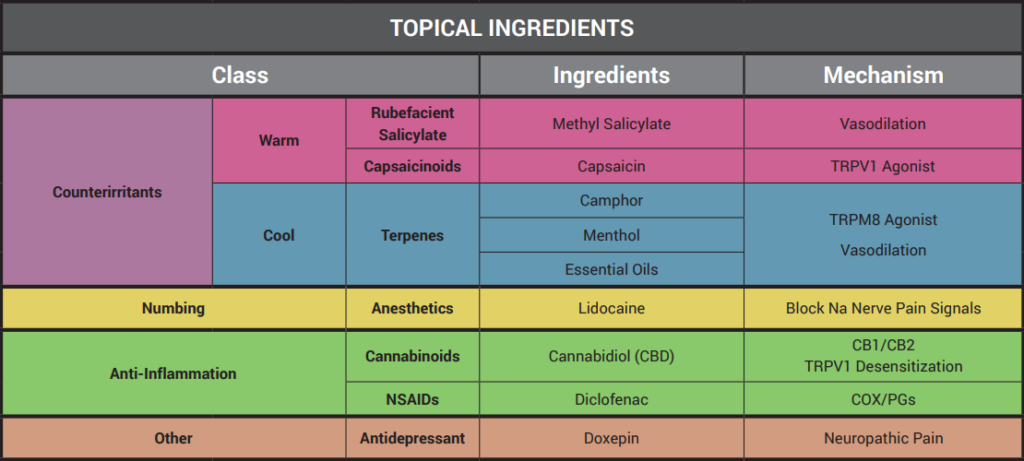
Topical analgesics encompass several pharmacologic classes based on their mechanisms of action. The most common categories include counterirritants, capsaicinoids, local anesthetics, NSAIDs, cannabinoids, and specialized agents such as topical antidepressants. Counterirritants are among the most widely used ingredients in over-the-counter topical pain products. These agents produce warming or cooling sensations that alter pain perception through sensory stimulation. Common examples include cooling agents such as menthol or camphor, along with warming agents such as methyl salicylate, which are frequently found in creams, gels, sprays, and patches marketed for muscle and joint pain.
Local anesthetics represent another major class. Lidocaine produces analgesia by non-selectively blocking voltage-gated sodium channels in peripheral nerves, thereby inhibiting the transmission of pain signals. Anti-inflammatory topical medications include NSAIDs such as diclofenac, which inhibit cyclooxygenase enzymes and decrease prostaglandin-mediated inflammation and pain. Additional topical therapies include capsaicin, which acts on transient receptor potential channels involved in nociception, and cannabinoid-containing products, which produce effects within the endocannabinoid system. 3 Because many topical products contain multiple active ingredients, clinicians and patients should carefully review product labels to identify pharmacologic components and avoid unintended duplication.
How do counterirritants relieve pain?
Counterirritants reduce pain through sensory modulation involving temperature-sensitive receptors in the skin. Two receptor systems play a key role in this process: TRPV1 (warming) and TRPM8 (cooling).
Capsaicin activates TRPV1 receptors, which respond to heat and inflammatory stimuli. Repeated stimulation of these receptors leads to desensitization of nociceptive nerve fibers and depletion of substance P, ultimately reducing pain transmission.4
Cooling counterirritants such as menthol and camphor activate TRPM8 receptors, producing a cooling sensation that can temporarily relieve discomfort. Menthol also demonstrates dose-dependent pharmacologic effects; lower concentrations may produce mild anesthetic activity, whereas higher concentrations primarily function as counterirritants.
These agents typically provide short-term symptomatic relief and are commonly included in combination topical products marketed for muscle soreness, arthritis pain, and sports injuries.
What is the clinical role of capsaicin in pain management?
Capsaicin occupies a unique role among topical analgesics because it produces analgesia through neurochemical depletion of substance P and desensitization of nociceptive nerve endings by activating TRPV1.
Low-concentration capsaicin products ranging from approximately 0.025% to 0.1% are available over the counter and are commonly used for localized musculoskeletal pain and mild neuropathic symptoms.
A high-concentration capsaicin 8% patch is available by prescription for the treatment of postherpetic neuralgia and painful diabetic peripheral neuropathy. Because this product can produce intense local burning during application, it is administered in a clinical setting by trained healthcare professionals.
Clinical studies demonstrate that some patients experience meaningful pain reduction following a single treatment session, with analgesic effects often emerging after multiple applications over several weeks and lasting months.5
Capsaicin, therefore, represents an important non-opioid option for localized neuropathic pain, particularly when systemic therapies are ineffective or poorly tolerated.
What are the most common topical NSAIDs?
Topical NSAIDs provide targeted anti-inflammatory effects at the site of application and are widely used for localized musculoskeletal pain. Diclofenac is the most common topical NSAID in the United States along with compounded topical NSAID medications, whereas other topical NSAIDs are available internationally.
Diclofenac is the most utilized topical NSAID and is available in several formulations including gels, patches, and topical solutions. Diclofenac gel is frequently used for osteoarthritis affecting the hands, knees, and feet. Some evidence suggests that topical diclofenac provides analgesic benefits comparable to oral NSAIDs for localized conditions while reducing systemic exposure and gastrointestinal toxicity.6
Topical diclofenac patches may be used for acute pain due to strains, sprains, or contusions, whereas topical diclofenac solutions are commonly used for osteoarthritis of the knee and may contain penetration enhancers to improve dermal absorption.
What are important patient counseling points for topical pain medications?
Patient counseling plays a critical role in ensuring safe and effective use of topical analgesics. Patients should be instructed to apply topical medications only to intact skin and to avoid contact with eyes, mucous membranes, or open wounds. Washing hands after application is recommended unless the hands are the treatment site. Capsaicin exemplifies this concern as one the most common utilizations of finger cots to avoid these concerns.
Clinicians should also emphasize that many topical products contain multiple active ingredients, including counterirritants, anesthetics, and antiinflammatory agents. Reviewing ingredient labels can help prevent unintended duplication, especially considering the appreciable amount of cross-branding for over-the-counter (OTC) medications.
Patients should understand that topical therapies generally reduce pain rather than eliminate it entirely, and several days of consistent use may be required before maximal benefit is achieved.
Finally, clinicians should emphasize that topical medications, as with many oral medications, are most effective when incorporated into a comprehensive multimodal pain management plan, which may include physical therapy, exercise, behavioral strategies, and other pharmacologic therapies.7
Conclusion
Topical analgesics represent an important non-opioid strategy for the management of localized musculoskeletal and neuropathic pain. By delivering medication directly to the site of pain, these therapies provide targeted analgesia while minimizing systemic drug exposure and associated adverse effects. Understanding the pharmacologic mechanisms, clinical indications, and counseling considerations associated with these medications enables clinicians to incorporate topical therapies effectively into successful multimodal pain management strategies.
References:
1. Häuser W, Petzke F, Fitzcharles MA. Efficacy, tolerability, and safety of topical analgesics in neuropathic pain. Lancet Neurol. 2023;22(3):240-252.
2. Pergolizzi JV Jr, Magnusson P, LeQuang JA, et al. Topical nonsteroidal anti-inflammatory drugs for the treatment of musculoskeletal pain. Pain Ther. 2021;10(2):709-725.
3. Bannuru RR, Osani MC, Vaysbrot EE, et al. OARSI guidelines for the non-surgical management of knee, hip, and polyarticular osteoarthritis. Osteoarthritis Cartilage. 2019;27(11):1578-1589.
4. Zou S, Kumar U. Cannabinoid receptors and the endocannabinoid system: signaling and function in the central nervous system. Int J Mol Sci. 2018;19(3):833.
5. Anand P, Bley K. Topical capsaicin for pain management: therapeutic potential and mechanisms of action. Pain Rep. 2021;6(1):e900.
6. Kennedy WR, Vanhove GF, Lu SP, et al. A randomized controlled trial of high-concentration capsaicin patch for peripheral neuropathic pain. Pain Med. 2021;22(5):1125-1136.
7. Derry S, Conaghan P, Da Silva JA, et al. Topical NSAIDs for chronic musculoskeletal pain in adults. Cochrane Database Syst Rev. 2016;4:CD007400.